

A fast food and street food storefront mockup featuring both an awning and poster placements — the combination gives you multiple touchpoints in a single scene, which is how these facades actually work in practice.

A logo placement on the transom window above a store entrance — one of the most common real-world signage positions for retail and hospitality brands. The location is visible, prominent, and reads as permanent.

A street-level store window mockup photographed from the pavement — the view a customer gets walking past. Shows how the brand graphics read from a real-world approach, which is the most relevant perspective for a retail identity presentation.

A storefront mockup with two placement points: the window and the awning above it. A practical combination for presenting how a brand identity carries across the two most visible elements of a hospitality or retail facade.

A clean, elegant shop window mockup for luxury and high-end retail brand presentations. The window setting is well-proportioned and uncluttered — the brand artwork is the only thing competing for attention.
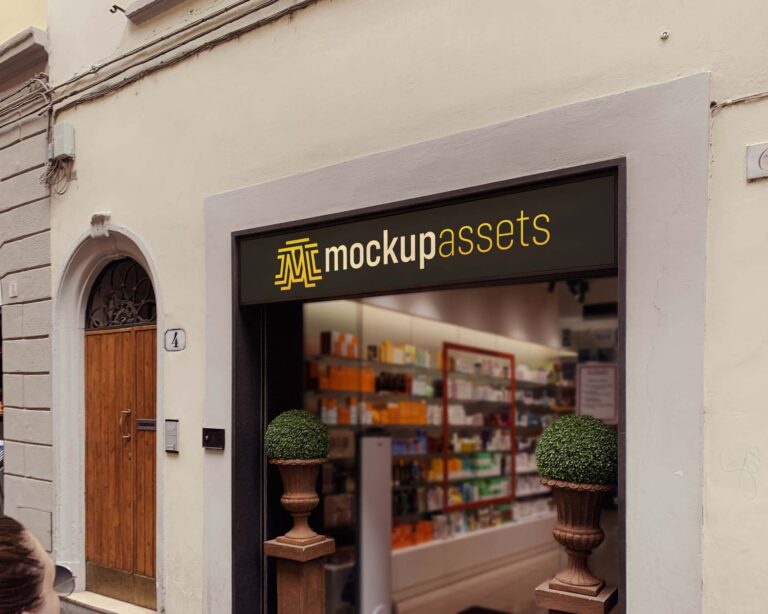
A shopfront sign mockup suited to cosmetics stores, pharmacies, and health and beauty brands — the facade setting and sign style communicate a clean, professional character that fits those sectors without modification.

A vertical storefront with two artwork placements — the main facade sign and a window graphic. The vertical format is common in fashion and retail environments where the frontage is tall and narrow rather than wide.

A black 3D store sign on a retail facade — clean, bold, and immediately recognisable as quality signage. Works for any brand with a physical location where the sign is the first point of contact.

A 3D logo mounted on storefront wood beams — the natural material gives this a warm, artisanal character that works well for restaurants, independent stores, and craft-based brand identities.

Two mockups of the same luxury store facade shot from different perspectives — one closer, one pulled back. Each includes two artwork placements: a window and the awning above it. Useful when the client needs to see the facade at different viewing distances.